

 0 items
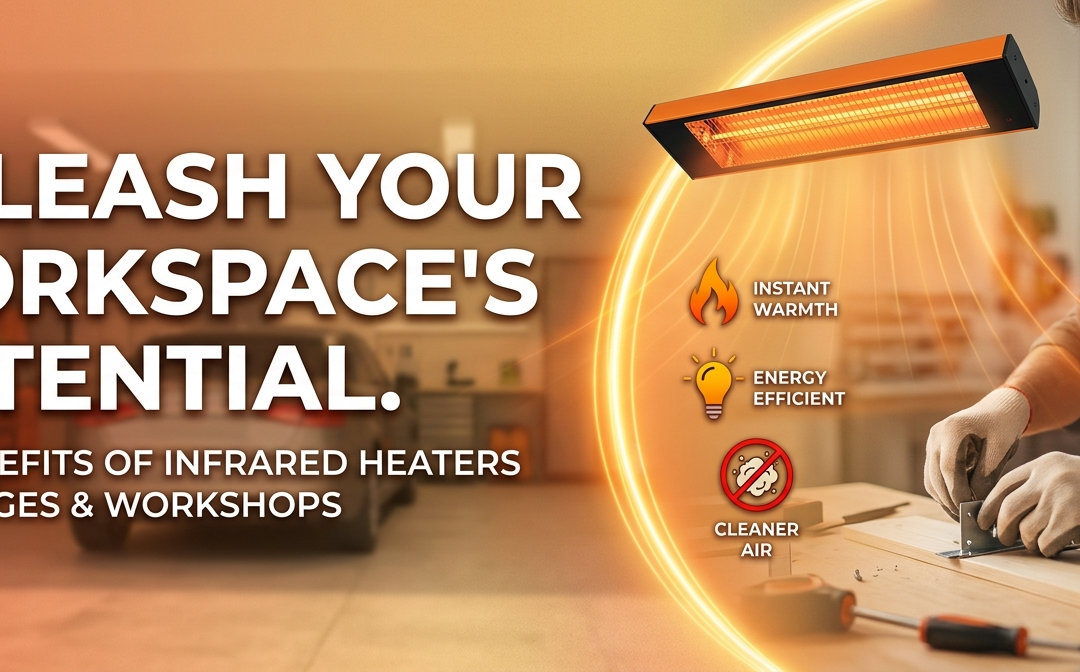
For many of us, the garage or workshop is more than just a place to park a car or store seasonal decorations. It is a sanctuary for DIY projects, a home gym, a woodworking studio, or a specialized automotive bay. However, as the temperature drops, these uninsulated or poorly heated spaces often become uninhabitable.
Traditional heating methods—like noisy forced-air blowers or inefficient space heaters—often struggle to keep up, leaving you shivering in a drafty room while your utility bill skyrockets. This is where Infrared (IR) heating changes the game. Unlike conventional systems, infrared technology offers a sophisticated, efficient, and highly effective way to maintain a comfortable working environment.
Understanding the Science: How Infrared Differs
To appreciate why infrared is ideal for a garage, you first have to understand how it works compared to a standard furnace.
Convection Heating (standard forced air) works by heating the air itself. The warm air rises to the ceiling (where you aren’t working), while the cold air stays at floor level. In a drafty garage where the door is frequently opened, that expensive warm air escapes instantly, forcing the heater to work overtime to replace it.
Infrared Heating, on the other hand, mimics the sun. It emits electromagnetic waves that travel through the air without heating it. Instead, these waves heat the objects and people they strike. When you stand in front of an infrared heater, you feel the warmth immediately on your skin, tools, and workbench.
1. Instant, Targeted Warmth
In a workspace, you don’t always need the entire room to be 22°C (72°F). You just need the area where you are currently working to be comfortable. Infrared heaters provide instant heat the moment they are switched on. There is no “warm-up” period required for the air to circulate.
Because infrared travels in a straight line, you can mount a heater directly above your workbench or lift. This “spot heating” allows you to stay warm exactly where you are, rather than wasting energy heating the empty corners of a three-car garage.
2. Energy Efficiency and Cost Savings
One of the most compelling arguments for infrared technology is its efficiency. Because IR heaters do not rely on air movement, they lose significantly less energy than convection heaters.
-
Reduced Heat Loss: In a garage with poor insulation or high ceilings, convection heat is lost through the roof and walls almost as fast as it’s generated. Infrared keeps the heat “low” where the objects are.
-
Lower Operating Costs: Many high-quality electric infrared heaters convert nearly 100% of the energy they consume into heat. Over a long winter, this can lead to substantial savings on your monthly energy bill.
3. A Healthier, Cleaner Environment
Workspaces are often dusty. Whether you are sanding wood, welding, or working with chemicals, the last thing you want is a forced-air system blowing those particles around the room.
-
No Dust Circulation: Since infrared heaters don’t use fans to move air, they don’t kick up sawdust, allergens, or fumes. This is a massive benefit for woodworkers who need a clean environment for finishing or painting.
-
Silent Operation: Unlike the roar of a propane “torpedo” heater or the hum of a furnace blower, electric infrared heaters are virtually silent. This allows you to focus on your craft, listen to music, or hold a conversation without competing with mechanical noise.
4. Safety and Durability
Modern infrared heaters are designed for the rugged environment of a workshop. They are typically built with robust casings and lack the exposed flames associated with portable propane heaters.
-
Moisture Resistance: Many units are rated for outdoor or damp environments, meaning they can handle the humidity changes common in a garage.
-
Fire Safety: Because they heat objects directly and don’t rely on open combustion in the same way old-school heaters do, the risk of accidental fires from flying sparks or flammable vapors is significantly reduced (though proper clearance from combustibles is still required).
5. Keeping Your Equipment in Prime Condition
It’s not just about your comfort; it’s about your tools. Rapid temperature swings in a garage can cause condensation to form on cold metal surfaces. This leads to rust on expensive table saws, hand tools, and automotive parts.
By using infrared heat, you keep the temperature of the tools themselves consistent. Warm tools don’t collect condensation as easily as cold ones do when the air temperature fluctuates, effectively extending the life of your equipment and keeping your workspace “dry” and rust-free.
Implementation Tips
To get the most out of your infrared system, keep these three tips in mind:
-
Mounting Height: Ensure you follow the manufacturer’s guidelines for mounting. If the heater is too high, the intensity of the heat dissipates; too low, and it may feel uncomfortably hot on your head.
-
Thermostat Control: Use a programmable thermostat or a remote control to manage the output. You can keep the garage at a “base” temperature of 5°C to prevent freezing and quickly ramp it up when you’re ready to work.
-
Positioning: Aim the heater toward the areas where you spend the most time—your primary workbench, the engine bay, or your gym equipment.
The Bottom Line
Transitioning your garage or workspace to infrared heating is an investment in your productivity and your passion. By choosing a system that heats objects rather than air, you gain a quieter, cleaner, and more cost-effective environment. Whether you’re a professional mechanic or a weekend hobbyist, the direct warmth of infrared technology ensures that the “off-season” for your projects is a thing of the past.
Stop fighting the cold and start working in a space that’s as professional as the projects you create within it.